Posty

#48 Ken Wilber, One Taste - ulubione fragmenty

Transformative vs. translative spirituality In a series of books, I have tried to show that religion itself has always performed two very important, but very different, functions.  One, it acts as a way of creating meaning for the separate self: it offers myths and stories and tales and narratives and rituals and revivals that, taken together, help the separate self make sense of, and endure, the slings and arrows of outrageous fortune.  This function of religion does not usually or necessarily change the level of consciousness in a person; it does not deliver radical transformation.  Nor does it deliver a shattering liberation from the separate self altogether. Rather, it consoles the self, fortifies the self, defends the self, promotes the self.  As long as the separate self believes the myths, performs the rituals, mouths the prayers, or embraces the dogma, then the self, it is fervently believed, will be “saved”—either now in the glory of being God-saved or Godde...
#46 Wstrząs tektoniczny w podświadomości

Obraz
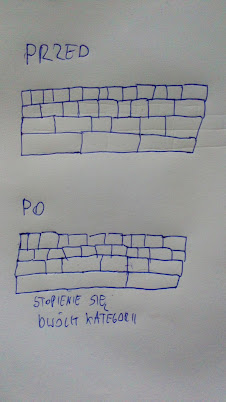
Semantyka umysłu jest wielopoziomowa: istnieją niższe kategorie semantyczne, na których nadbudowane są wyższe, itd. Te, które sobie uświadamiamy, są przysłowiowym wierzchołkiem góry lodowej. Z istnienia większości głębszych poziomów nie zdajemy sobie sprawy, mimo to mają ogromny wpływ na nasze życie, ponieważ na nich nadbudowane są kolejne "piętra" i siłą rzeczy kształt całego budynku naszego życia zależy od nich. Stosunkowo łatwo jest pracować nad powierzchownymi warstwami (osobiste, kulturowe), trudniej ze średnimi (gatunkowe), tych najniższych przypuszczalnie nie da się nawet przerobić (ewolucyjne).  Często zdarza się, że ktoś żyje całe życie w jakimś błędnym/szkodliwym przekonaniu, które ma wpływ na całe życie, i jest ono tak głęboko uwarunkowane, że nie zdaje sobie nawet sprawy z jego istnienia. Jeśli nie pomoże mu ktoś z zewnątrz - mądrzejszy człowiek, terapeuta, lub jakieś poparte refleksją wstrząsające przeżycie, które zdemoluje jego schematy myślenia - wówczas jest n...

#45 Mindfulness, Bliss, and Beyond

Obraz
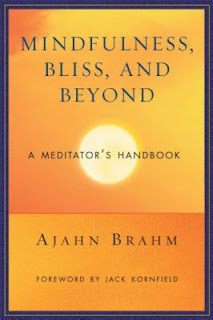
Genialna książka o medytacji w rozumieniu buddyzmu theravady. Ajahn Brahm, brytyjski mnich buddyjski, absolwent fizyki teoretycznej na Uniwersytecie Cambridge, przedstawił krok po kroku kompletną ścieżkę medytacyjną, od zera do oświecenia. Znając proces z własnego doświadczenia, skwantyfikował doświadczenia medytacyjne i przybliżył słowami rzeczy, które większość ludzi uważa za niewyrażalne. Książka jest gęsto upakowana treścią, pełna praktycznych porad i metaforycznych opisów, takich, jak ten poniżej: "Wyróżniającą cechą błogości pierwszej jhany jest fakt, iż jest ona pozbawiona całkowicie obecności pięciu zmysłów. Kiedy pięć zmysłów zostało zamknięte, włączając w to wszystkie echa pięciu zmysłów pojawiających się jako myśli, wtedy opuszczamy świat ciała i rzeczy materialnych ( kāmaloka ) i wkraczamy w świat czystego umysłu ( rupaloka ). To tak, jakby wielki ciężar został zrzucony. Albo, jak opisywał to Ajahn Chah, tak jakbyś miał pętlę zaciśniętą na szyi od kiedy tylko pamiętasz...

#44 Wprowadzenie w psychologię ego - prof. Mirosław Piróg

Obraz
(Wybrane myśli) Ego wg Freuda - część nas, która powstaje przez kontakt ze światem zewnętrznym, id to świat wewnętrzny, superego świat norm społecznych. Ego szuka kompromisu między id (impulsy) i superego (normy). Ego wg Junga - główny complex (zespół myśli, uczuć), z którym się najbardziej utożsamiamy; to, co myślimy o sobie. Nieświadomość vs podświadomość - nieświadomość lepszym określeniem, bo nie jest pejoratywne jak podświadomość i nie sugeruje byciem jakimś miejscem w mózgu. Nieświadomość, to po prostu coś, co nie jest uświadomione. Jaźń - szersze, większe ja. Ego staje sie tylko przedmiotem poznania. Jak człowiek w deszczu pod parasolem to ego, nieświadomość to deszcz razem z parasolem.  W procesie indywiduacji nieświadomość i ego stają się jedną całością i środek ciężkości się przesuwa pomiędzy deszcz i człowieczka. Proces indywiduacji - przewrót kopernikanski - zmienia się centrum, nie jest nim ego tylko jaźń; ego sie staje jak planeta krążąca wokół słońca, a jaźń jest sło...

#42 Michael Taft: Deconstructing the Self - PL

Full text:   https://deconstructingyourself.com/deconstructing-the-self.html Medytację można opisać jako pewną próbę dekonstrukcji, a rzeczą, którą dekonstruujemy, jest doświadczenie sensoryczne. Ale jest jedno doświadczenie, które należy do innej kategorii, niż pozostałe: doświadczenie bycia "ja". Poczucie bycia osobą, ego. Doświadczenie to jest skupione wokół samoreferencyjnych myśli i uczuć. Komentujący głos w twojej głowie, obrazy w umyśle, emocje których właśnie doświadczasz są jego składowymi. Rozumienie ego jako doświadczenia sensorycznego jest bardzo użyteczne, ponieważ pozwala nam je opanować. Możemy zdekonstruować doświadczenie zmysłowe bycia ego, tak jak każde inne doświadczenie zmysłowe. Wielu ludzi uważa, że celem medytacji jest w jakiś sposób zniszczenie lub pokonanie ego. Często słyszy się nauczycieli medytacji lub duchowych doradców, którzy demonizują ego jako źródło naszych wszystkich problemów - zasadniczo szatan buddyzmu. To jest nieporozumienie. Ludzkie ...

#41 Michael Taft: A Universal Theory of Awakening

Full text: https://deconstructingyourself.com/a-universal-theory-of-awakening.html Full-blown awakening means to notice clearly that everything you experience is a brain-generated virtual representation arising in working memory. This is known in various traditions as nondual awakening, understanding the nature of mind, and so on. Your senses gather data about the world around you, as well as your internal state. This data streams to the brain, where it goes through layers and systems of processing. The processed sensory data is then assembled into an ongoing, continuously-updated virtual representation of the world around you and the you in the world.  Usually this experience of self-and-world is transparent, meaning that we are not aware that it is a representation. We take it to be the real world which we are experiencing. And, of course, there is a real you (a human being with blood and guts) and a real world (other people and animals, plants and planets, and, well, ever...

#40 Michael Taft: Deconstructing the Self

  Full text: https://deconstructingyourself.com/deconstructing-the-self.html (...) meditation can be described as a kind of deconstruction, and the thing we are deconstructing is sensory experience. But there is one sensory experience that is categorically different than all other sensory experiences: the experience of being “me.” The sense of being a person, an ego.  (...)This sensory experience is centered around self-referential thinking and feeling. The narrative voice in your head, the pictures in your mind’s eye, and the emotions you’re having right now constitute almost all of it. (...) Understanding the ego as a sensory experience is extremely useful, because it allows us to get a handle on it. We can deconstruct the sensory experience of being an ego just like we can deconstruct any other sensory experience. (...) Many people understand the goal of meditation to be somehow the destruction, annihilation, or vanquishing of the ego. It is common to hear meditation tea...